Hindistan kendi içerisinde bir renk skalası ve her köşesinde sizleri büyüleyecek güzelliklere sahip. Ancak herkesin tüm ülkeyi dolaşacak ne imkânı ne de zamanı var. Bundan dolayı ülkenin bu bağlamdaki renkliliğine şahit olmak isterseniz bir şekilde başkent Delhi’de bir festivale seyahat zamanınızı denk getirmenizi öneririm. Bir yıl boyunca başkente sayısız festival gerçekleşiyor ve bir tanesine denk gelmeniz bile size ülkenin geneli hakkında iyi bir örnekleme olabilir.
Hindistan’ın yüzyıllardır var olan kültürel ve dinsel gelenekleri her festivalde kendi heybetini gösteriyor. Hindistan alt kıtası içerisinde yer alan festivaller Hint kültürünün çok ciddi bir bölümünü yansıtıyor. Bu festivaller de ülkeyi ziyaret eden yabancı gezginlere olabilecek en doruk etnik patlamaları yaşatıyor diyebiliriz. Başkent Delhi’de festivaller takvimi tıka basa dolu. Aklınıza gelmeyecek pek çok festivale ev sahipliği yapan bu başkentte en dikkat çeken ilk on festivali sizler ile paylaşmak istedim.
Lohri
Her yıl on üç ocakta kutlanan bu festival kış gün dönümünü işaret eder. Ateşe tapınılan ve bununla birlikte aynı zamanda kış döngüsünün doruğunu, yavaş yavaş hükmünü kaybedişini kutlayan bir festival. Festival öncelikle çocukların mahallelerindeki büyüklerden, Dulha Bhatti adına şarkılar söyleyerek, para toplamasıyla başlıyor. Dulha Bhatti, bir efsanevi karakter, zenginlerden alıp fakirlere dağıtan, namı diğer Puncaplı Robin Hood. Toplanan paralar, Güneş battıktan sonra yakılacak olan şölen ateşi malzemesi almak için kullanılır. Alevler yükseldikten sonra halk etrafında toplanır, gün içerisinde yapılan yemekler paylaşılırken aynı zamanda aleve şeker, gevrek pirinç, patlamamış mısır adak niyetine atılır. Lohri genellikle aileler içerisinde kutlanıyor, özellikle yakın bir geçmişte evlilik ve/veya yeni doğum (özellikle erkek çocuk) söz konusu ise festivalin coşkusu bir kat daha artıyor. İyi kader kutlanmak üzere misafirler ağırlanabiliyor. Güney Hindistan’da Lohri genellikle üç gün sürüyor ve hasat zamanının başlangıcını temsil ediyor. Batı Bengal’de ise Hindu’lar Lohri’yi, ruhlarını arındırmak maksadıyla Ganga’nın sularında yıkanarak kutlar. Bu festivale ne isim verilirse verilsin özünde taşıdığı tek bir mesaj var o da, tekliğin cesareti ve tüm olumsuzluklarda birlikteliğin yükseleceği.
Uluslararası Uçurma Festivali
Her yıl organize edilen bu festival genellikle Ocak ayının sonlarında doğru kutlanır. Tüm Hindistan ve hatta dünya genelinde profesyonel uçurma uçuranlar bu etkinlikte bir araya gelir. Uçurtma tutkunlarına özel düzenlenen bu festival, Cannaught Bölgesinde yer alan Palika Pazarına yakın bir meydanda gerçekleşir. Eğlence, yaratıcılık teması üzerine kurgulanan bu festival çok renkli sahnelere gebe olabiliyor. Akşamları ise nefes kesen görüntülere şahit olma imkânınız var zira gökyüzünü led ışıklar ile yapılmış uçurtmalar süsler. Kelimenin tam anlamıyla havada uçuşan bir şenlik ve şölen söz konusu. Her şekilde ve renkte olan uçurtmalar Yeni Delhi’nin semalarını donatıyor. Açık alanlar, teraslar, meydanlar halkın bir araya geldiği toplanma noktaları haline dönüşüyor. Dostane atışmalar, yarışlar sayesinde festivale aynı bir dinamik katılıyor. Özellikle resmi olarak yer alan iki yarış, kavgacı ile gösteriş uçurtma yarışı, festivalin en heyecanla beklenen anlarından biri. Bol ödüller ve kutlamalar ise bu festivalinin güzel bir kapanışı olur.
he most holy day for the Buddhists, Buddha Jayanti is celebrated in honor of the Light of Asia, called by Edwin Arnold, well known as Buddha. Previously named Siddhartha, Buddha was the son of the king of Kapilavastu. His journey from a prince to a spiritual and moral leader has been very tiring as well as enriching.
Buddha’s philosophical thoughts and understandings of the ways of life help his devotees acknowledge human suffering and make oneself a better person. His Eight Fold Path of Salvation which involves the correct type of intention, action, speech, effort, livelihood, concentration and mind improves human life and makes it worth living.
Description
This special day is celebrated as the birth day, the day of attaining salvation and the death day of Buddha. On this auspicious day, devotees offer prayers to Buddha. Buddhists monks lead a procession accompanied by sacred chanting.
In Delhi, the triple folded festival is a day for greeting and celebrating. A special program is organized in the Tibet House in Delhi which is jointly arranged by the Union Ministry of Culture and Indian Habitat Centre. Dance performances and rituals are organized on this occasion.
Time to celebrate
Buddha Jayanti in Delhi is celebrated on the full moon in the month of Vaisakhi which is usually between April and May. Buddhists all across the globe consider this day as an extremely auspicious day as Buddha was born on this day as well as attained salvation and died on this particular day. The coincidence is unique and considered a mystery.
International Mango Festival at Dilli Haat
Date: Between the months of June – July
Started in- 1987
Venue: Dilli Haat, Netaji Subhash Palace, Lala Jagat Narayan Marg, Pitampura / Dilli Haat, Lal Sai Mandir Marg, Opp Hari Nagar Bus Depot, Janakpuri
Nearest Metro Station: Netaji Subhash Place on Red Line / Janak Puri West on Blue Line
Timings: 11.00 AM to 10.00 PM
Tickets: INR 20 (Adult)
INR 10 (Children)
International Mango Festival Main attractions: Mango eating completion; Products like mango pulp, mango quiz, Aam panna, juice, Aam papad, pickles, jelly, fresh mangoes, chutneys and pickles on sale. Visitors can also buy a small mango tree. Over 500 varieties of this fruits are on display.
Some interesting quick facts about mangoes
Did you know that there are more than 1365 varieties of mangoes grown all across the globe, and it is just It is India that cultivates around 1000 varieties?
Were you aware that in addition to cricket and Bollywood, Indians and Pakistanis are mad about mangoes too? Mango is the national fruit of India and Pakistan.
Were you aware that India is the largest producer of mangoes but manages less than 1 percent of international mango trade? Why is that? It is because this country also consumes most of its own production.
If India and its people love mango, what can be a better reason to celebrate this love, than to have a special festival, dedicated to Mangoes. Delhi tourism and the Delhi government organizes International Mango Festival, every year at Dilli Haat, in the month of June and July.
International Mango Festival Overview
Largely popular amid mango-lovers, the annual International mango festival of Delhi is a celebration of mangoes and other produces. This 2-day festival puts on display more than 500 varieties of mangoes brought here from different states of India. If the ‘king of fruit’ is always on your mind, you must visit this festival and begin the summer season on a ‘juicy’ note. The first festival was organized in the year 1987.
Mango festival of Delhi is common platform bringing together not only mango-lovers but also sellers, gourmands, horticulturists and growers, from all parts of the country including states like Bihar, Haryana, Uttar Pradesh and Himachal Pradesh.
International Mango Festival Features
Mango-lovers can get their hands on a vast variety of popular mangoes along with those that have some interesting names such as Neeleshwari, Sikri, Royal SP, Suwarn, Himsagar, Raddy Pasand, Banganpally, Kensington, Dushehari, Langda, Chausa, Malda, Neelam, Papitiyo, Langra, Kesar, Sensation, Nazuk Badab, Fazli, Amrapali, Tommy Atkins and Alphonso. From the Kaleemullah Khan’s nursery, varieties of mangoes like Aishwarya, Abdullah, Bombay Green, and Abdullah are brought here. One of the rare species of mangoes- Gula by Tariq Mustafa from Purkazi in Muzaffarnagar is also displayed here.
The festival is a platform for food processing industries as well as agro-industries to showcase their products. Another aim is to offer publicity to exporters and domestic players in the mango industry.
If you love cooking, then there is something for you also. Reputed chefs have their kiosks and stalls who share the recipes of different kinds of mango-based desserts, main course dishes, and shakes, by adding their own touch. You can also learn mango carving here.
It festival equally popular amid locals as well as tourists, be it for leisure or business purpose. Delhi government sells mango plants here, supports mango trade and allures business from all around.
The festival also musical events like several versions of folk songs on mango along with competitions like slogan writing competition and mango eating competitions.
Guru Purab
India is a land of variety and diversity. Its various religions and cultures form the rich tapestry of this land. Followers of Sikhism can be found in India.
Guru Purab in Delhi is an important festival of the Sikhs. The festival is celebrated to honor the birth anniversary of Guru Nanak, the first of ten Sikh Gurus. Guru Purab is also known as ‘Guru Nanak Jayanti’.
Apart from Guru Nanak Jayanti, Sikhs celebrate other Guru Purabs. These days celebrate either the birth or martyrdom of the other Sikh gurus like Guru Gobind Singh, Guru Tegh Bahadur, Guru Ram Das, Guru Angad Dev and Guru Har Kishan.
Description of Guru Purab:
Guru Nanak was the leader of Sikhs who enlightened people with his teachings and preaching. The festival celebrating his birth is Guru Purab, which is also known as ‘Prakash Utsav’. The celebration starts from three weeks before the main event. Processions, locally called ‘Nagar Kirtans’ , are taken out through the city streets. The holy book, ‘Guru Granth Sahib’ is recited in the gurudwaras; this recitation is called Akhand path. The recitation continues for three days and ends on the final day of the event.
On the main day of the event, the holy book is decorated with flowers for the final celebration. Special lunches, called ‘langar’, are served to the devotees as well as to all passers-by. Everyone, irrespective of caste, culture is invited to partake of this special food. This act reinforces Guru Nanak’s secular teachings.
The gurudwaras in Delhi are decorated with lights, which are the symbolic representation of ‘enlightenment’.
Time For Celebration of Guru Purab:
Guru Purab is celebrated every year in the month of Kartik according to the local calendar, which falls in the month of October/November. The festival is celebrated on the birthday of Guru Nanak. Tourist from different corners of the country gathers to experience the grand celebration.
Mahavir Jayanti
India prides itself on being a secular land. Delhi being the capital of the state reflects the secular spirit of the country and celebrates all the festivals associated with various religions in the right spirit. Mahavir Jayanti is the most important festival of the Jain community and it is celebrated with a lot of traditional fervor in Delhi. As Old Delhi has a sizeable Jain population, the celebrations in this part of the city are marked with greater zeal and ardor.
History of the Mahavir Jayanti in Delhi
Mahavir Jayanti marks the birth of Mahavira, the last Tirthankara in the galaxy of the twenty four Tirthankaras of the Jains.
Description of the Mahavir Jayanti in Delhi
The Jain Temples in Delhi are decorated with colored flags on the occasion of Mahavir Jayanti. The followers of Jainism take a bath early in the morning and then visit the temples to offer their prayers. Praying and worshipping is of foremost importance to the Jains rather than any show of opulence and magnificence.
A ceremonial bath is given to the idol of Mahavira. The idol is then kept in a cradle and taken around in a procession throughout the city. All the Jains participate in this procession. Prominent features of the processions are the skits that are put up by small children portraying the various phases of the life of Mahavira.
After returning to the temples, they offer milk, fruit, rice and water to the Tirthankara. Lamps are illuminated and incense sticks are burnt. This lends a spiritual touch to the atmosphere. Dharma Sabhas are also held on the occasion of Mahavir Jayanti in Delhi. The religious discourses serve to enlighten the people so that they follow the right path of virtue. After meditating for some time, they eat the Prasad. Many cultural programmes are also organized when this festival is celebrated.
Time for celebrating the Mahavir Jayanti in Delhi
Mahavira was born on the 13thday of the rising moon in the month of Chaitra. This day corresponds to late March or early April in the Gregorian calendar. It is on this day that Mahavir Jayanti is celebrated in Delhi.
Phool Walon ki Sair
The Phool Walon ki Sair is a festival which is celebrated in the capital city of Delhi in India. Phool Walon ki Sair is a festival or a colorful procession of the flower sellers. In this festival, the Hindus and the Muslims participate with equal enthusiasm. The Phool Walon ki Sair festival is celebrated by everybody in Mehrauli in south Delhi.
Description of Phool Walon ki Sair:
The Festival of Phool Walon ki Sair in Delhi was started in the 19th Century by the Mughal Emperor Akbar Shah II. The festival, however, became popular during the reign of Bahadur Shah Zafar. Shah Zafar was chosen to be the next emperor by the British. But Queen Mumtaz Mahal wanted to make her son Mirza Jehangir to sit on the throne. But later on, Mirza was sent in deported to Allahabad. His mother Mumtaz then took an oath that she would make a contribution of a four-poster flower bed at the sacred shrine of Khwaja Bakhtiyar Kaki at Mehrauli if her son was permitted to return. When Mirza was at last allowed to return, and rightfully given the throne, according to the promise, a beautiful flower canopy was created to which the flower sellers added an intricate flower pankha at their own cost. This was carried in a procession to the saint’s tomb.
During the Delhi Phool Walon ki Sair, floral tributes are offered at the dargah of the Saint. On the occasion of the grand festival of Phool Walon ki Sair, huge pankhas made of palm leaves decorated with shiny flecks and flowers are offered. Performances of Kathak dances and Quawalis also take place. Fire dancers lead a large procession across the streets carrying flower pankhas. The cultural program of the Festival of Phool Walon ki Sair is held at the Jahaz Mahal.
Time of Celebration of Phool Walon ki Sair:
The Phool Walon ki Sair Festival in Delhi is a festival of joviality and merriment. The festival is celebrated every year in the months of September-October.
Sri Thyagaraja
Delhi is not only the political capital of India but also the cultural capital of the country. Different cultural and artistic programs are held in the capital. The glorious history and the legendary past make Delhi an ideal location to host such events.
Sri Thyagaraja is one of the pillars of Carnatic music in India. Born in 1767 the great composer was born in the Tanjavur district of Tamil Nadu. His compositions are not only unique but evolve a sense of inspiration and motivation.
Description
The Thyagaraja Festival, Delhi is one of the most renowned cultural programs of the country. This eleven day program brings together some of the country’s best vocalists, dancers and musicians. The festival features 25 different kinds of programs.
Artists from different parts of the country travel to Delhi to participate in this prestigious event. Reputed classical dancers and vocalists gather to honor and pay homage to the Sri Thyagaraja.
Time to celebrate
The renowned Thyagaraja Festival, Delhi is usually organized in the end of February and the beginning of March. Art lovers from different parts of the country travel to Delhi to experience this rare moment.
Urs at Hazrat Nizamuddin
The shrine of a famous compassionate Muslim Sufi and spiritual saint, Sheikh Hazrat Nizamuddin Aulia Chisti, is located in the historic Nizamuddin village, about 2 kilometers from Humayun’s Tomb. The shrine is one of the country’s most valued places and also an important tourist attraction of Delhi. The shrine was built in 1562 by a rich merchant called Farid Khan.
Description of Urs at Hazrat Nizamuddin Aulia’s Shrine:
The tomb or shrine of Hazrat Nizamuddin Aulia in Delhi is a much admired site for the Muslim pilgrims. This sacred shrine of the Sufi saint enounced a policy of religious tolerance. Hazrat Nizamuddin Aulia forced the Mughal army to move back with his prayers in the year 1303. This incident made him popular over the night. The construction work of his tomb started in 1303and continued for a long time. The tomb was finally completed in 1562. The Urs at Hazrat Nizamuddin Aulia’s Shrine in Delhi is a religious fair celebrated on the death anniversary of the holy saint. The tomb of Amir Khusrau, Hazrat Nizamuddin’s famous disciple, lies in front of his master’s tomb. The death anniversaries of both the master and his follower are celebrated with much splendor and flamboyance. This celebration is known as the Urs at Hazrat Nizamuddin Aulia’s Shrine.
Delhi Urs at Hazrat Nizamuddin Aulia’s Shrine is observed with a lot of display and grandeur. On this occasion, best of the Quawalis are performed. Another special feature of the Urs at Hazrat Nizamuddin Aulia’s Shrine in Delhi is that special quality sweet meat and kebabs are offered.
Time of Celebration of Urs at Hazrat Nizamuddin Aulia’s Shrine:
The Festival: Urs at Hazrat Nizamuddin Aulia’s Shrine in Delhi is celebrated every year in the month of April. The festival is held in memory of the famous Sufi saint Hazrat Nizamuddin Aulia.
Baisakhi
Introduction
One of the most important festivals among the Sikhs, Baisakhi is celebrated with immense enthusiasm and devotion in all parts of the country. The Baisakhi Festival marks the birth of the Khalsa Panth and the beginning of a new way of life.
Baisakhi in Delhi is a popular festival during which devotees young and old celebrate this auspicious day making it one of the most enjoyable occasions in the region.
Often called the Harvest Festival, Baisakhi is an important day for farmers as on this day they can enjoy the fruit of the seeds they had sown long time ago. Their efforts and hard work has ended and it is time for them to relax and enjoy. Feasting and merry making are important aspects of the Baisakhi celebrations.
Description
Devotees on the day of the festival visit the Gurudwaras, the place of worship for Sikhs. As Baisakhi coincided with Bengali New Year, Hindus on this auspicious day visit temples. The day begins with offering fruits and flowers to the deities. Sikhs gather together and form processions to the Gurudwaras.
The day is very significant for the Sikhs because it is this day in the ear 1699 that the Khalsa or the Sikh nation was formed. The Sikhs were given a code of conduct to live their lives accordingly.
Special prayers are organized on the day of the Baisakhi Festival. After the completion of the rituals at the Gurudwara, the devotees receive specially made Kara Prasad and sweetened semolina. Community lunch is an integral part of the celebration.
Time to celebrate
According to the Sikh calendar, Nanakshahi, Baisakhi is celebrated on the first day of the Baisakh month which is usually between March and April.
Beating the Retreat Ceremony
The Beating the Retreat Ceremony is held in the capital city of Delhi in India. The Republic Day celebrations in Delhi initiate with a multihued parade on the 26th of January along the Rajpath. The parade comes to a close with the ‘Beating the Retreat Ceremony’, which happens on the 29th of January. The location of the Beating the Retreat Ceremony in Delhi is at Vijay Chowk or the victory square, with the stately Rashtrapati Bhawan at the background.
Description of Beating the Retreat Ceremony:
The Festival of Beating the Retreat Ceremony in Delhi is observed keeping in mind the age old tradition, according to which, soldiers called a close down to the war at sunset. This call was the sound of the bugles vibrated across the battlefield calling a halt to the fighting.
The Beating the Retreat Ceremony in Delhi officially marks the finale of the Republic day celebrations. The ceremony starts with definite units of the armed forces performing lively executions. During the Delhi Beating the Retreat Ceremony, after the live performances, a hymn is played by the bands collectively called ‘Abide with me’. On the day of the Beating the Retreat Ceremony in Delhi, at 6 o’clock in the evening the bugles call the retreat sound and the National flag is lowered and the National anthem is sung in musical harmony. The silhouetted riders move away from the background which sets the conclusion of the Republic Day celebrations.
Time of Celebration of Beating the Retreat Ceremony:
The Beating the Retreat Ceremony of Delhi takes place on the 29th of January. This ceremony is conducted after 3 days of the beginning of the Republic day celebrations, on 26th January. The Delhi Beating the Retreat Ceremony brings a close to the Republic Day celebrations.
Rupublc Day
Garden Festival
Qutub Festival
-
Lohri Festival
-
Kite Festival
-
Buddha Jayanti Festival
-
International Mango Festival
-
Guru Purab Festival
-
Mahavir Jayanti Festival
-
Phool Walon ki Sair Festival
-
Sri Thyagaraja Festival
-
Urs at Hazrat Nizamuddin Festival
-
Baisakhi Festival
-
Beating the Retreat Ceremony
-
Republic Day
-
Garden Festival
-
Qutub Festival
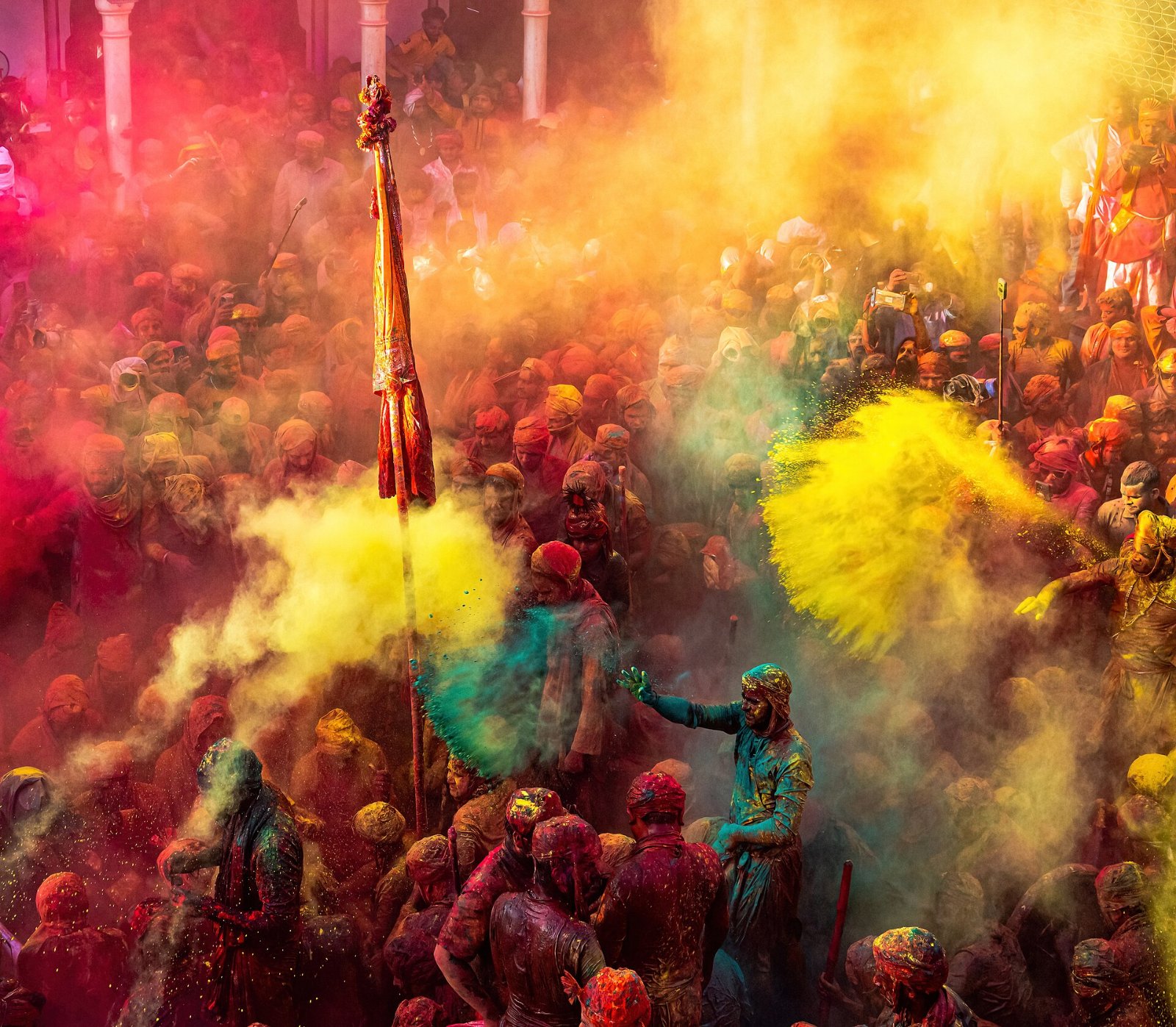
Image: Lathmar Holi 2022 in Nandgaon, Uttar Pradesh (edited) — Original: Sachinghai09
Derivative work: Radomianin, CC BY-SA 4.0, Wikimedia Commons