You are in the city’s heart; everywhere is in turmoil, and chaos flows from every direction. On the other hand, we are at the heart of this confusion and so isolated. We are in a time machine and are teleported to the end of the Chalcolithic Period, the beginning of the Early Bronze Age, that is, to the period of 3500-3000 BC. The environment is calm, and the officials are at the beginning of their labour, separating the fine soil piece by piece, like a rice wedding. They extract history from the hardened mud by watering the soil. It’s breathtaking in the city’s heart; you can’t help but keep saying, “It’s just magnificent.”
This is the Beşiktaş metro station site and the archaeological excavation site maintained by the Istanbul Archaeology Museums. At first, we were worried about what would happen to this relatively recent excavated site. Then the archaeologist and excavation leader refresh us while a female archaeologist lies beside us, sprinkling water on the mud. He reassures us all that nothing will happen. With the continuation of the excavations and the completion of the metro work, it will be a place to be exhibited to the public. I immediately think of the Athens metro and how fascinated I was; it meant we would have a station there. Of course, we do not know what will show up, but it is comforting to hear sentences that do not contain words such as “destroying” or “covering up”.
We are usually at sea level, but the excavation site is below sea level. In the heart of Beşiktaş, out of sight. As the excavation head speaks, I perceive that I am in a much more critical field than I thought. Maybe we are in an excavation area that will mark the history of world migration. We breathe history on a discovery that will shake conservative archaeologists and try to interpret it with our knowledge. In this area, which has the potential to open a new chapter in humanity’s migration history, the first signs of history, when excavated, were the remains of the tram line and warehouses built in 1910. The layer below this, which welcomed the archaeologists, was from the late Ottoman period. Digging a little lower, the remains of the middle and late Byzantine periods were encountered. Immediately after this layer, small finds from the Hellenistic and Roman periods, which are very important for the Bosphorus line we encounter in many parts of Istanbul, were unearthed. However, the most valuable of the current layer is the ruins, which are thought to be about 6000 years old. A journey to the prehistoric past, layer by layer…
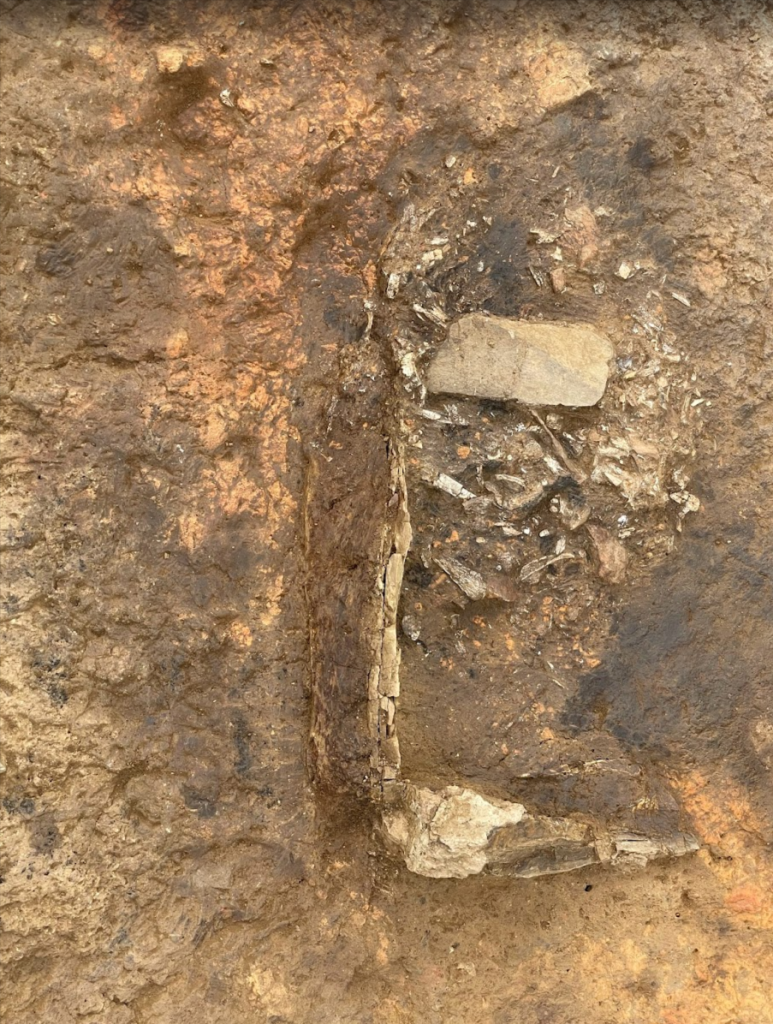
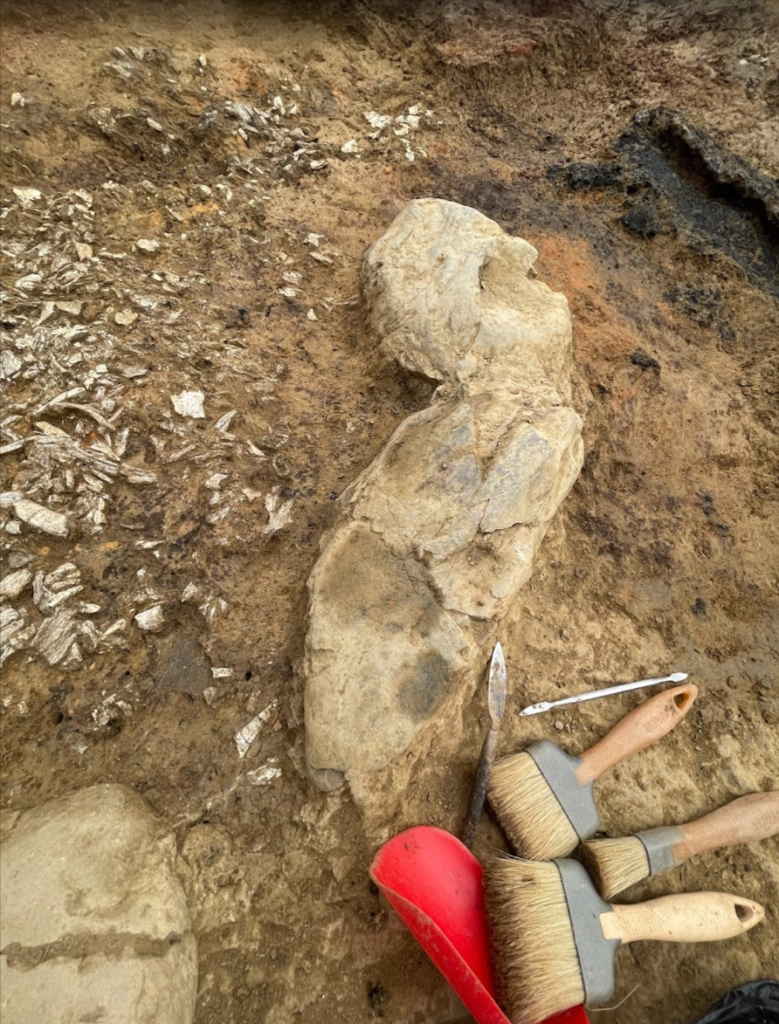
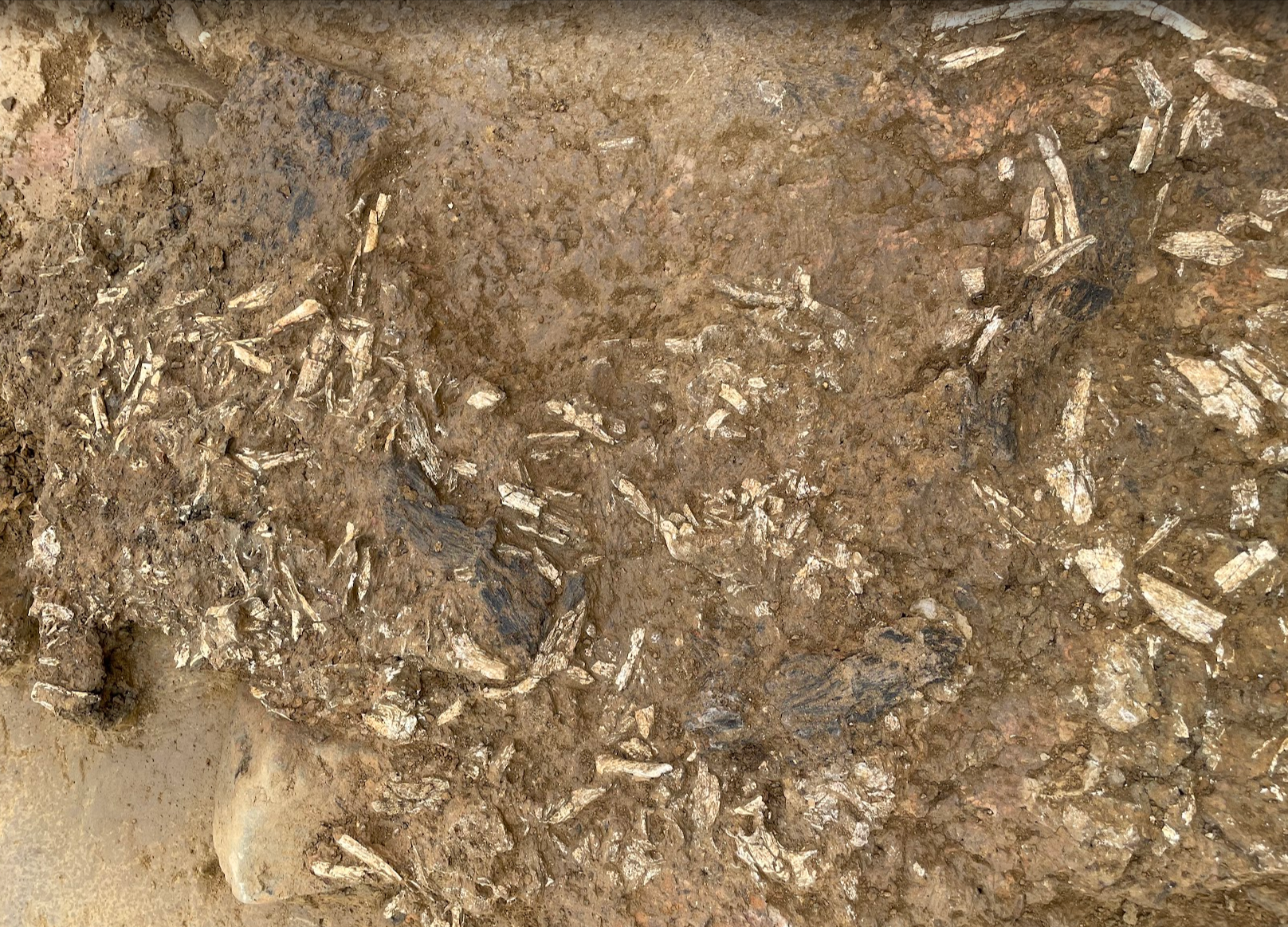
At least 40 kurgans, generally round-elliptical in plan, surrounded by stones and differing in size, were identified. If you ask what Kurgan is, let me try to explain it quickly. A kurgan is a burial place in Eastern Europe and Central Asia, typically a mounded hill with a mound-shaped structure, often containing mostly wooden tombs. The oldest kurgan-type graves found in Turkey were discovered in this excavation area. Throughout the Early Bronze Age, they were buried by cremation; the bones burst from the heat and crumbled. You witness all of this firsthand. It’s like time is frozen. The bones shattered by cremation were either swept into an area surrounded by four mini pillar stones or were collected and buried in pots. Archaeologists have unearthed these in the most natural way possible. You can witness them every step of the way. It’s pretty exciting.
Some kurgans have been reported as “innovation”, that is, direct burial tombs. Most kurgans reflect the burning that occurred there, evidenced by burnt wood remains and the reddish colouration of the soil. Some were burned elsewhere and carried to the kurgans in this excavation area in a pot. However, the history of migration will be completely changed thanks to these artefacts. The tombs burned and buried here were the first examples in literature. Among those shown to me, I saw another significant measure, which is that the corpse was laid in the fetal position on the trees before it was cremated; a tree was laid on it and burned in this way. This is the first example in itself.
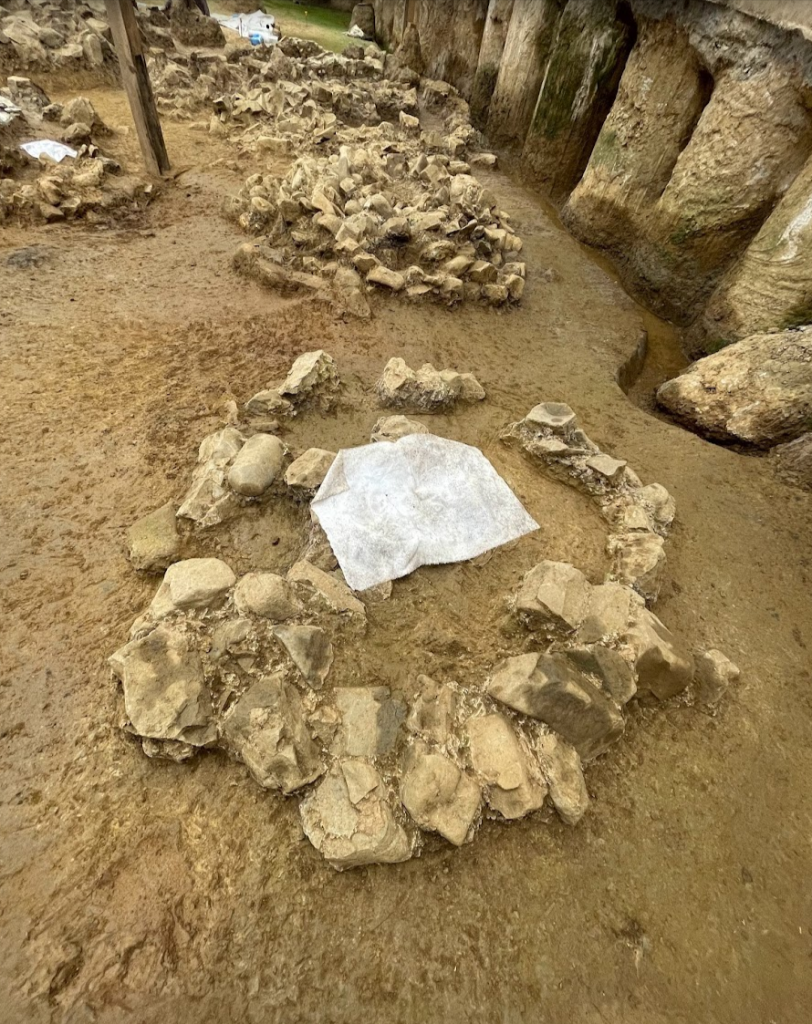
The stones used for the kurgans are of poor quality, and it is estimated that they were carried from the beds of the Ihlamir, Beşiktaş and Hasan Pasha streams that existed at the time. Their intended use is to determine the shape and boundaries of the kurgans. It is even said that they act as support because there is a slope towards the sea.
There is a precious historical opening here. It will be a first for Istanbul to be exhibited at the top of the station when the metro comes into play, together with everything found. We must uphold such values. A similar cultural entity emerged at and under the Haydarpaşa Train Station, but now that is the subject of another article…
*The word kurgan means “barrow,” or “artificial mound,” in Turkic and Russian