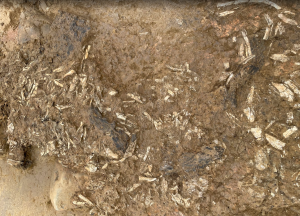
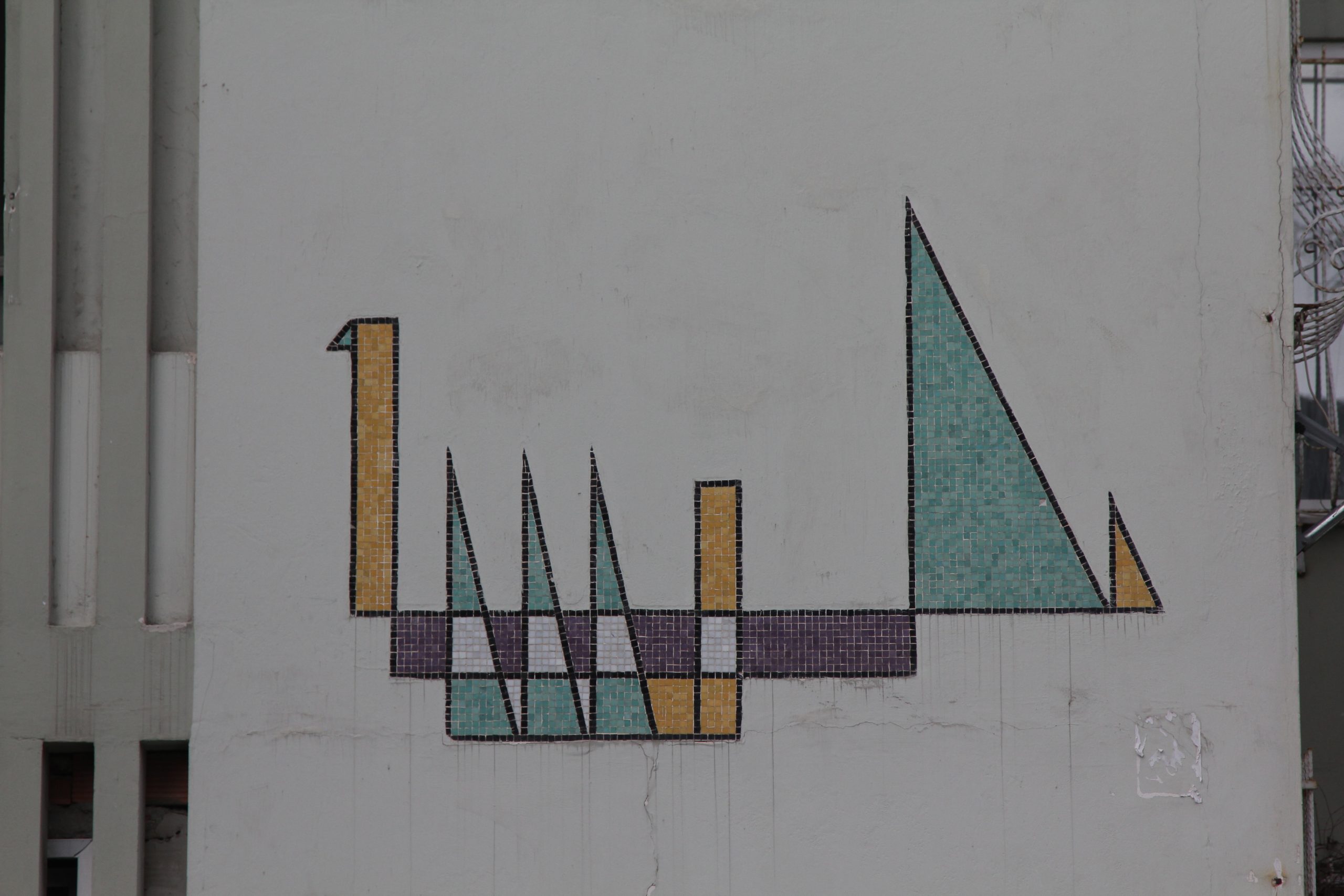
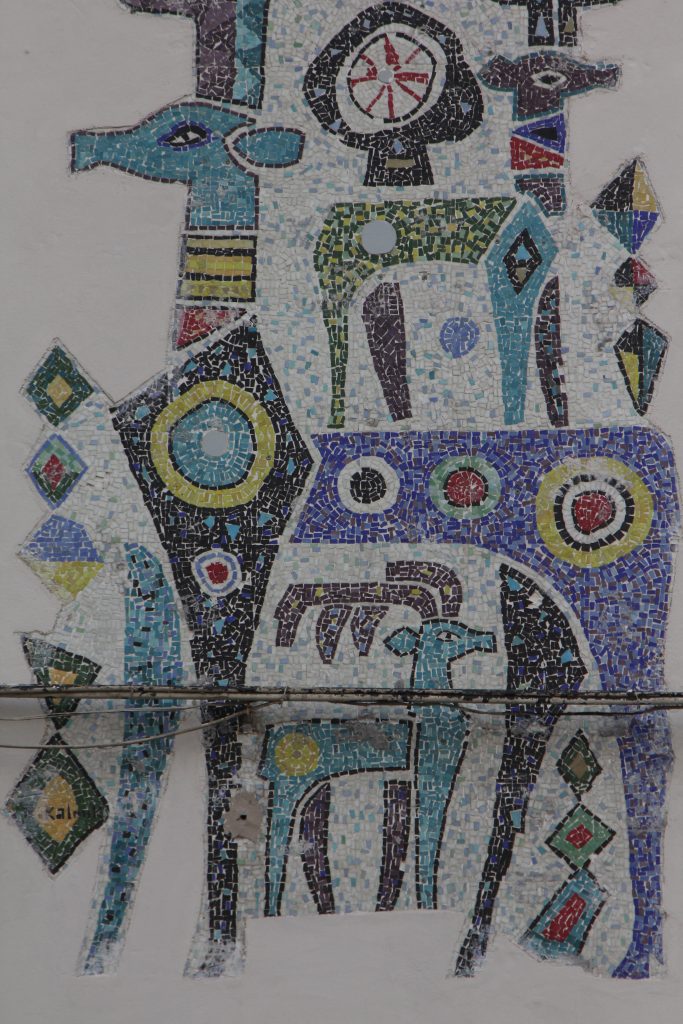
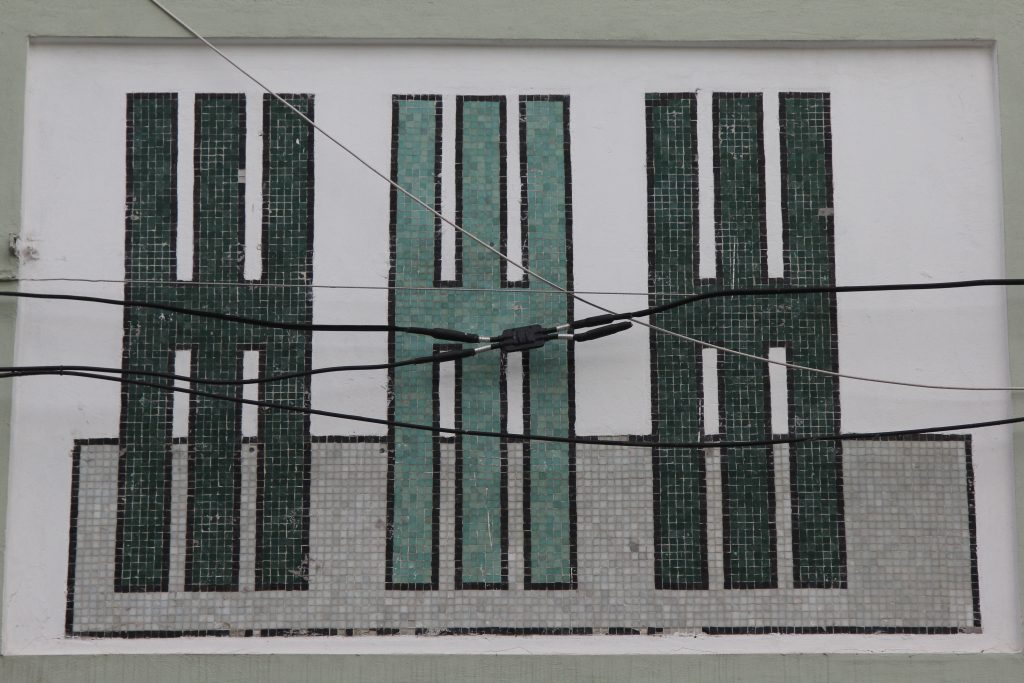
Tucked into the urban fabric of Istanbul, Akçam Street harbours one of the most quietly extraordinary concentrations of mid-twentieth-century Turkish art anywhere in the city. Six foundational figures of the Republic’s artistic golden age — Bedri Rahmi Eyüboğlu, Nurullah Berk, Ferruh Başağa, Sabri Berkel, Ercüment Kalmık, and Eren Eyüboğlu — left their mark here in the form of twenty monumental mosaics, created from 1957 onwards. Vibrant, ambitious, and deeply rooted in Anatolian sensibility, these works transformed an ordinary street into an open-air gallery long before the concept became fashionable.
That they still stand at all is something of a miracle — and not entirely a reassuring one.
Walk down Akçam Street today, and the evidence of neglect is impossible to ignore. Insulation panels seal entire façades. Commercial signage has been bolted directly onto mosaic surfaces. Industrial grime has settled into the tesserae over decades of indifference. In an era when short-term economic calculations routinely override long-term cultural stewardship, these works have become collateral damage — not through malice, necessarily, but through the far more corrosive force of institutional indifference.
This matters beyond the merely aesthetic. These mosaics are not decorative embellishments. They are documents — visual archives of a moment when Turkish artists were forging a distinctly Anatolian modernism, weaving folk memory, geometric abstraction, and Mediterranean colour into a singular artistic language. To allow them to deteriorate is to erase a chapter of that story, one that cannot be rewritten.
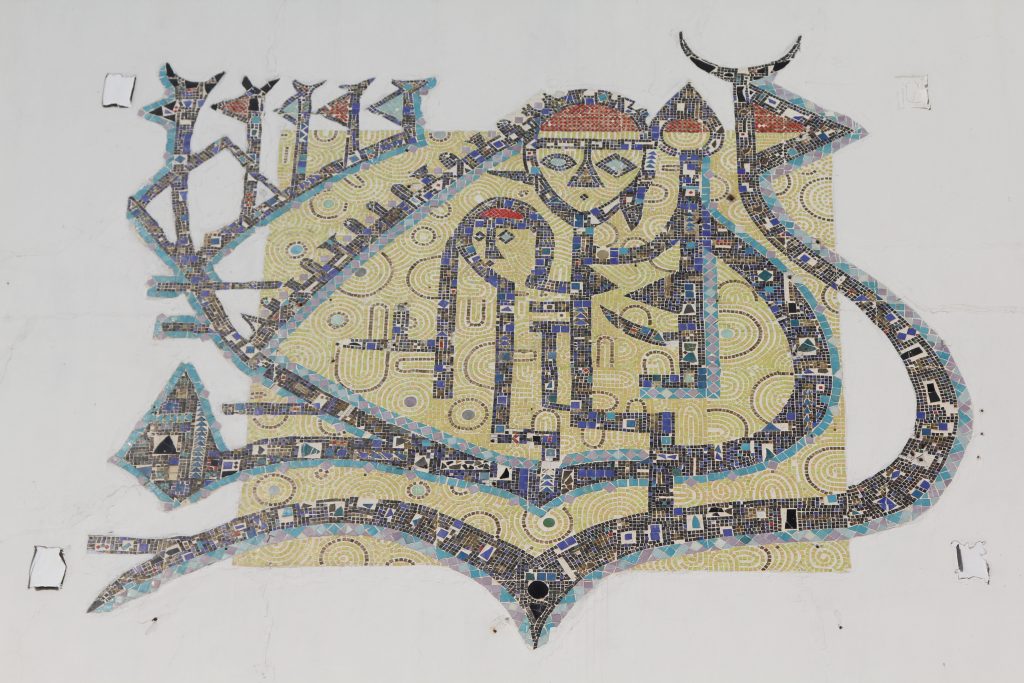
There are, admittedly, counterexamples worth acknowledging. Yapı Kredi Bank’s fourth Levent branch has chosen to honour the Bedri Rahmi Eyüboğlu mosaic on its exterior wall, treating it as an asset rather than an inconvenience. Ziraat Bank has gone further, encasing its own Eyüboğlu mosaic in protective glass. These gestures are modest but instructive: preservation is possible when the will exists.
What is needed now is for that will to become policy rather than an exception.
The Ministry of Culture and Tourism should move to register these mosaics as protected cultural assets, commission specialist conservators to assess their condition, and establish a restoration programme with dedicated funding. Municipal authorities have an equally important role: zoning and renovation permits along Akçam Street ought to include mandatory heritage impact assessments to ensure that no further damage is done in the name of energy efficiency or commercial rebranding.
Beyond institutional intervention, there is a compelling case for Akçam Street to be actively promoted as a cultural destination in its own right. Professional guide associations, travel operators, and cultural institutions could develop curated itineraries centred on the street, drawing visitors into a neighbourhood that most tourist maps overlook entirely. Schools, universities, and art organisations could use the site as a living classroom — a place where the history of Turkish modernism is not confined to museum vitrines but encountered at eye level, in full scale, on the street.
None of this requires extraordinary resources. It requires attention — the deliberate, sustained attention that any living heritage demands if it is to survive the pressures of the present.
Akçam Street is not a ruin. It is a resource. The question is whether we choose to treat it as one before time and let the answer make itself for us.
The Artists
Bedri Rahmi Eyüboğlu (1911–1975) was among the most polymathic figures in twentieth-century Turkish culture — a painter, poet, ceramicist, graphic artist, and writer whose work drew deeply from Anatolian folk tradition while engaging fluently with European modernism.
Nurullah Berk (1906–1984) brought the rigour of Cubist and Expressionist influence to Turkish painting, deploying geometric structure and bold chromatic contrasts with distinctive authority.
Ferruh Başağa (1920–2010) was a pioneer of Turkish abstract painting, working with geometric form and luminous colour in a practice that remained consistently vital across six decades.
Sabri Berkel (1907–1982) extended the language of abstraction into sculpture, working primarily in metal to produce compositions of stark geometric power.
Ercüment Kalmık (1907–1990) was a painter whose abstract canvases — characterised by geometric precision and chromatic intensity — placed him among the defining voices of his generation.
Eren Eyüboğlu (1937–2008) shared with her partner, Bedri Rahmi, both a medium and a sensibility: a commitment to Anatolian imagery rendered through the lens of modernist form, expressed across painting, ceramics, graphics, and the applied arts.